


Introducing the Islands of Amami
An island whose nature the world recognizes
Amami Oshima Amami Oshima
Deep, ancient forests and a beautiful blue sea that has sustained the lives of islanders for generations.On Amami Ōshima, untouched nature and the gentle rhythm of daily life blend together, creating a slower flow of island time.The scent of the tide, the whisper of the trees, even the air itself fills the traveler, and time spent as part of nature becomes a journey into the true richness of being human.


ROUTE MAP Route map
suspended
A Sunrise Welcoming Your Journey by Ferry
To Amami Oshima, the Galápagos of the East
Amami Oshima has two main ports: Naze Port, located in the center of the island where urban functions are concentrated, and Koniya Port in the south, which serves as the gateway to Kakeroma Island.Amami Oshima can be reached by two ferry routes: on the southbound Kagoshima–Amami Islands–Okinawa Route, ferries depart Kagoshima and arrive at Naze Port early in the morning, while northbound services from Tokunoshima reach Naze Port in the evening or at night.The Kagoshima–Kikai–China Route calls at both Naze Port and Koniya Port.


#2 Only possible with an early-morning ferry arrival—trek through the World Natural Heritage forest before anyone else arrives.
Ferries to Amami Oshima arrive at Naze Port at 5:00 in the morning on the Kagoshima–Amami Islands–Okinawa Route, and at 7:00 in the morning on the Kagoshima–Kikai–China Route. To make the most of your time from the moment you arrive and start your journey on the best note, the early-morning Kinsakubaru Primeval Forest Tour is the ideal choice for your first day.Since its inscription as a World Natural Heritage site in 2021, the island has welcomed many visitors, but compared to daytime tours, early-morning tours have far fewer participants, allowing you to walk through the primeval forest in deep silence and enjoy a truly luxurious moment—almost as if you have the World Natural Heritage forest all to yourself.


Your guide will meet you at Naze Port and provide transportation to the World Natural Heritage forest.
When your ferry arrives at Naze Port early in the morning, a local island guide will be waiting to welcome you at the port.After greeting your guide and loading your luggage into the car, you’ll head straight for the Kinsakubaru Primeval Forest, part of the World Natural Heritage site.Even in an unfamiliar place on a new island, you can begin your journey on Amami Oshima with peace of mind.


Walk through the quiet morning forest with no one else around, listening to your guide’s stories along the way.
At Kinsakubaru, the accompaniment of a certified guide is currently recommended in order to protect the ecosystem. With a guide explaining the island’s nature, rules, and wildlife in detail, you can deepen your understanding and enjoy the forest safely.Early morning is the time when nocturnal animals return to their nests and diurnal birds begin to stir—making it the moment when the forest feels most alive.


Entering the forest with a certified guide greatly increases your chances of encountering rare species unique to Amami Oshima, such as the Lidth’s jay and the Amami robin.Equally breathtaking are the clusters of giant tree ferns known as Hikagehego, whose prehistoric appearance evokes the age of dinosaurs—walking beneath them feels like stepping back in time.Covered in morning dew, the forest is filled with moist air and the deep scent of the earth, unlike during the day, and taking a deep breath in the clear air leaves you feeling refreshed from the inside out.


A luxurious cup of coffee brewed in the forest, soaking into both body and soul
At the end of the tour, your guide will brew a morning coffee for you right in the forest. With a freshly made warm cup in hand, you sit on a moss-covered rock and quietly watch the forest awaken. Free from the noise of everyday life, it is the ultimate morning luxury—reserved only for those who visit the Kinsakubaru Primeval Forest at dawn.


#3 One of the world’s three great textiles, Oshima Tsumugi, woven through 1,300 years of history.Timeless beauty—master craftsmanship passed on as a treasure for a lifetime, and beyond.
Oshima Tsumugi is a textile of extraordinary quality, drawing out the natural strength of silk through the traditional process of mud dyeing, and embodying a timeless beauty that never fades with changing eras.Using dye extracted from the Techi tree, iron-rich mud, and Amami’s unique “mud dyeing” technique, the silk threads are dyed to an almost unbelievable durability, with a deep, elegant sheen.The intricate patterns are the result of artisans’ skill and unwavering focus. With a level of precision comparable to modern computer control, the technique of perfectly aligning each kasuri unit—known as Maruki—goes beyond craftsmanship and enters the realm of art. It is this flawless balance of “design” and “execution” that allows the patterns to remain beautifully intact across generations, preserving their everlasting charm.Passing down Oshima Tsumugi is also an “investment in the future,” carried forward to the next generation of the island. And for travelers, owning a piece said to last for three generations becomes a personal investment as well—an unforgettable reward.We invite you to experience the lifetime value of Oshima Tsumugi, a treasure found only on Amami Oshima.


#4
Amami Oshima soul food
Keihan (chicken rice)
Woven from history and gratitude
The finest bowl
Keihan is a traditional dish that has been passed down for generations on Amami Oshima, born from the island’s history and its spirit of heartfelt hospitality. During the Edo period, when Amami was under the rule of the Satsuma domain, it is said that the original dish was served to entertain visiting officials. At a time when chicken was a precious ingredient, it was prepared with care, and the clear, delicately made broth was offered with gratitude and respect.The charm of Keihan lies in the harmony between its crystal-clear golden chicken broth and its colorful toppings. Finely shredded chicken, thin strips of egg, shiitake mushrooms, and red pickled ginger are beautifully arranged over rice, before being generously topped with piping-hot broth.Light and easy to enjoy like ochazuke, it is perfect for lunch or as a comforting finish to the day. Its gentle flavor soothes travel-weary bodies and quietly conveys the warmth of the island in every bowl.


#5
Precious bonds that connect our shimā (communities)
Island songs that give you strength to live
Warm, gentle sound
In the Amami dialect, “shima” does not simply mean “island,” but rather “village” or “community.” Shimauta (island songs) were born and developed within the daily lives of these settlements, once separated by mountains. In the tradition of uta ashibi—gatherings where families and friends sing in turn—improvisation was valued, giving rise to rich diversity in lyrics and melodies depending on the singer.While Okinawan folk songs evolved under the influence of the Ryukyu Kingdom’s court culture, Amami’s shimauta remained more rooted in ordinary life, growing as soulful expressions seeking liberation from oppression.The history of Amami includes periods of hardship under the rule of the Satsuma domain, yet through shimauta, islanders shared emotions, strengthened solidarity, and cultivated the “strength to live” needed to overcome adversity. Even when a song sounds cheerful on the surface, beneath it lie subtle humor and hope for the future—shimauta has long been a source of resilience.It is precisely because of this historical background that shimauta carries a warm, uplifting spirit that gently encourages all who listen.


A special tour to meet the songs that live within island life—exploring Amami shimauta and the people who carry it
There is a special tour led by a local shimauta guide from Amami Oshima, who shares stories of the island’s history and customs as you travel by car at a relaxed pace to places connected with shimauta—villages, waterfalls, streams, and beaches chosen according to the day’s best conditions.This is not a performance on an izakaya stage or at an event venue, but a live song offered amid Amami’s breathtaking natural scenery. Step into a unique world of sound created by untouched nature and a true island singer. Carried across generations through song and story, the melodies of Amami will surely resonate deep within your heart.


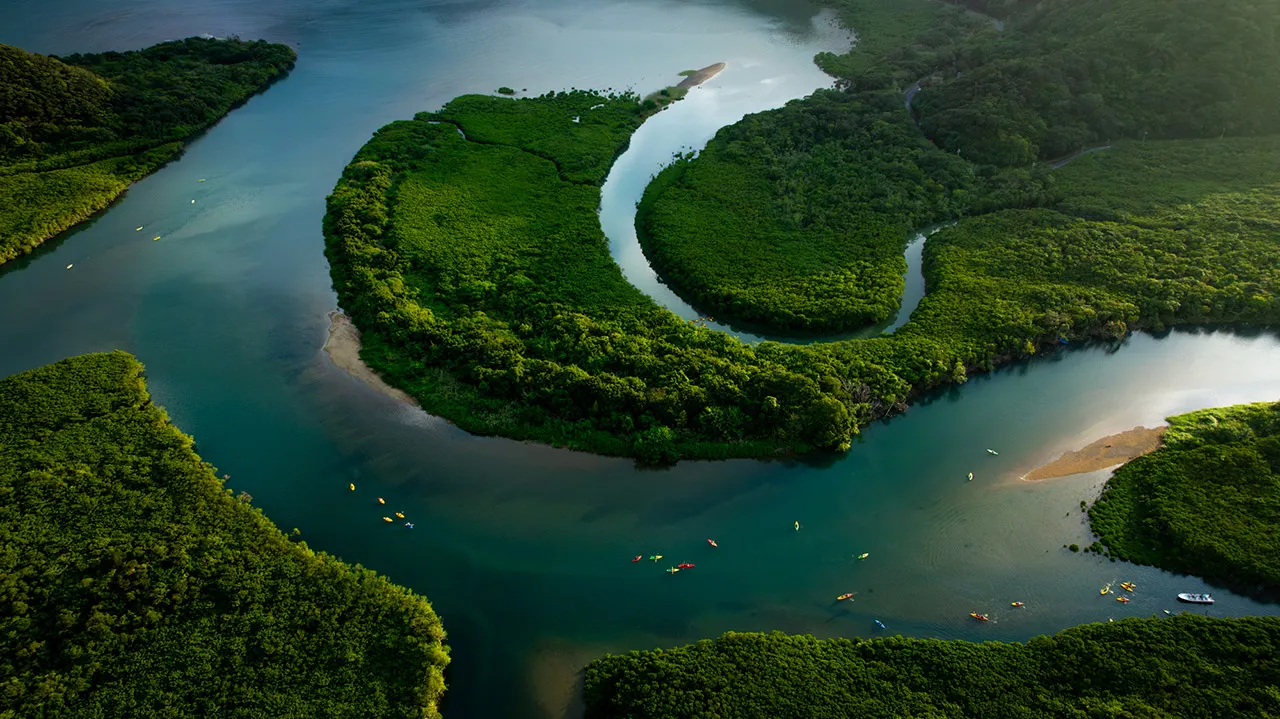
#6 Sunset Mangrove Canoeing—guided by a beautiful sunset, breathing in rhythm with the heartbeat of the Earth
As daylight fades, sky and water shift from orange to indigo in the “magic hour”—mangrove channels woven by heritiera trees fall under a hushed stillness.
Drift in a canoe, paddle slowly, and hear only wind, birds, and the faintest ripple. Here you are free from time and noise, and can savor the luxury of doing nothing. Through every sense you may feel part of forest and sea.
The mangrove forest in Sumiyō, south Amami Oshima, is Japan's second largest after Iriomote in Okinawa, formed in the brackish zone where salt and fresh water meet.
Evening tours often run as tides shift, so one outing can show many faces of the forest. Experience Amami's quiet, the mystery of magic-hour mangroves, and begin a journey to remember.


#7 Meet a “living fossil” in a World Natural Heritage forestA night tour to encounter the precious life nurtured on Amami Oshima
The Amami rabbit, often described as an ancestor of modern rabbits, is a “living fossil” that has retained its ancient form and is listed on Japan’s Ministry of the Environment Red List. In the night forest, illuminated by your guide’s light, the moment you meet its gentle, round eyes gazing back at you, you are filled with a mysterious emotion—as if connected to the earth of prehistoric times.
The clear call of the Ryukyu scops owl, designated as a National Natural Monument, and the vivid blue of Lidth’s jay shining in the darkness feel like a harmony of life echoing through the forest.
The nocturnal world woven by Amami Oshima’s rare endemic species. The heartbeat of the forest, felt through all five senses, awakens something deep within you.


#8 Explore the Amami Islands with direct flights to Amami Oshima as your hub! Next door are Tokunoshima and Kikaijima
With direct flights available, Amami Oshima is the perfect starting point for exploring the Amami Islands. After finding your travel rhythm amid its rich nature and warm culture, board a ferry and follow the sea routes onward to the neighboring islands.Tokunoshima, located next to Amami Oshima, is an island where powerful nature and the tradition of bullfighting still thrive.Kikai Island is known for its unique landscapes shaped by uplifted coral reefs and its tranquil village scenery.Traveling by ferry is more than transportation—it is the experience of connecting island to island.As the pace of time gently shifts, the distinct character of each island comes into focus. Begin your journey through the Amami Islands with Amami Oshima as your base, and let the sea guide you into your own island time.
Contributors

Kinshakubaru primal forest and fresh morning coffee tour
Sunset mangrove canoe tour
Amami Tour Guide “Amaniko”

Amami shimauta tour carried on the island breeze
Amami de Night—wildlife after dark
Slow Guide Amami


