


Introducing the Islands of Amami
An island of smiles and joy
Kikaijima Kikaijima
About 24 kilometers east of Amami Oshima lies Kikai Island, floating in a deep blue sea and shaped by land formed from uplifted coral reefs. Surrounded by beautiful waters, the island is home to a way of life where unique culture still thrives—and above all, a gentle spirit that warmly embraces everyone.The moment you step onto the island, you may feel as if you have somehow become “one of the locals,” as though you’ve moved here in an instant, wrapped in an unexpected sense of warmth.Small, heartfelt encounters that happen naturally, quiet conversations shared with islanders—those fleeting moments will surely become irreplaceable memories that never fade.


ROUTE MAP Route map
suspended
A Morning Arrival in Kikai Island by Ferry
To Kikai Island, the Island of Uplifted Coral Reefs
Only the Kagoshima-Kikai-China route calls at Wan Port on Kikaijima. The Kagoshima-Amami Islands-Okinawa route does not call at Kikaijima.
The ferry arrives at Kikaijima at 4:30 a.m. on southbound services from Kagoshima, and at 8:30 p.m. on northbound services from Amami Oshima.
Especially on the southbound arrival at 4:30 a.m., your journey begins before dawn, offering a uniquely ferry-style travel experience.


#2
Marine fun in the Kikaijima sunrise
Sunrise SUP
Sugira Beach is five minutes by car from the port; bright uplifted coral seabed makes the water exceptionally clear—a signature Kikaijima spot.
Pair with an early ferry arrival to use pre-check-in time and start your day with marine activities on a beautiful sea.
Morning light and calm water let you feel Kikaijima’s nature in depth; as the sun rises, blues shift toward emerald—quiet-hour moods only.
Ideal for starting your island day right.
Sunrise SUP runs when the sea is calmest. Guides help with stance and paddle, so first-timers can join safely. Practice in the shallows; early mornings mean less wind and waves—good for beginners.
Paddle out slightly to see white sand and coral shapes below—Kikaijima naturally feels like an uplifted-coral island. Changing colors and light as the sun rises are highlights of SUP at sunrise.


Nature adventures on the coral island! The only SUP tour specialist shop on Kikai Island!
SouthBeats


#3
Breathtaking Scenic Spots of Kikai Island
Kikai Island Geopark Shaped by Uplifted Coral Reefs
One of the reasons Kikai Island is considered so special is that it is a “growing island,” still rising to this day. Over countless years, coral reefs from the ocean floor have been lifted upward, shaping the island’s plateaus and striking white coastal fault lines. In recognition of this unique geological history, Kikai Island was designated a Japan Geopark in 2025.A geopark is a community-based initiative that shares the story of a region’s nature and culture as one, through efforts to learn from, protect, and make use of its geological heritage.Across the island, you can find uplifted coral terraces, dramatic coastal faults, and landscapes formed by fractured coral reefs—places where you can truly feel the island’s origins beneath your feet.


A Grand Panorama Overlooking the Entire Island
Hyakunotai Park
Located in the heart of the island, Hyakunotai Park offers sweeping panoramic views shaped by uplifted coral plateaus. The bright landforms merge seamlessly with the vast sky, allowing you to experience the radiant scenery that defines Kikai Island as an “Island of Light.” With little to obstruct the view, you can overlook the island’s rolling terrain and scattered villages, gaining a full perspective of its unique geography. It is a peaceful lookout where you can quietly immerse yourself in the landscape.


Dynamic Landscapes That Reveal the Island’s Origins
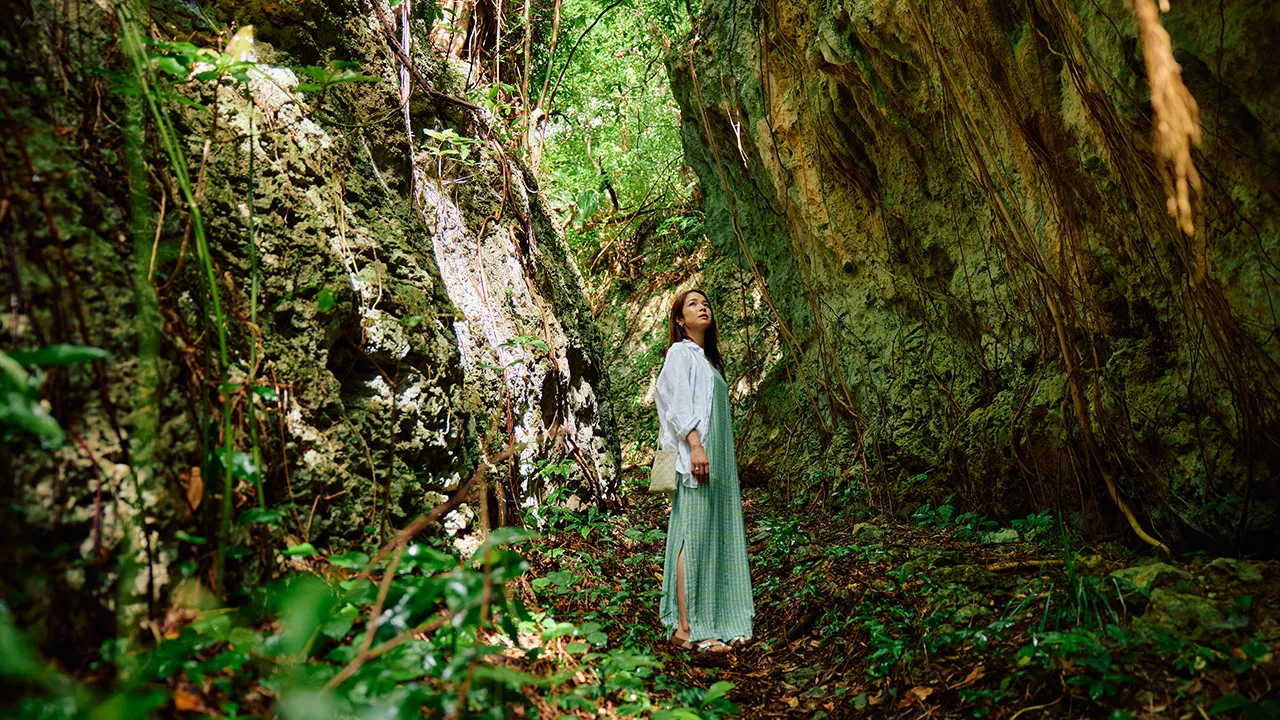
Coral Fissures
Formed as uplifted coral reefs slowly split apart over countless years, the “Coral Fissures” are a striking testament to the island’s geological story. Still absent from most guidebooks, this hidden landscape feels like a secret waiting to be discovered. One glance is enough to understand how the island was born and how it has continued to rise and grow. With only the sound of wind and rustling forest passing through, it is a place where the quiet power of nature can be deeply felt—a serene spot that embodies the true spirit of Kikai Island.


Go Meet the Majestic Tree Overflowing with Life
Hige no Gajumaru (Bearded Banyan Tree)
As you travel along the island road, you will encounter Hige no Gajumaru, a banyan tree whose aerial roots hang down like a long beard. The roots stretch toward the earth and gradually grow into expanding trunks—an embodiment of life nurtured over time. Standing close, you can feel the quiet embrace of its shade and the unique space created by its spreading roots. Blending seamlessly into the surrounding landscape, it is a place where you naturally pause and find yourself face to face with the island’s living nature.


A Great Tree That Has Watched Over the Island’s History
Tekuteku Gajumaru (Banyan Tree of Tekuteku)
One of the iconic giant trees of Kikai Island is the Tekuteku Gajumaru, a highlight often included in local eco-tours. Its thick, twisted trunk grips the earth with quiet strength, while its branches stretch wide toward the sky. Firmly rooted in the uplifted coral plateau, the tree silently tells the story of the island’s long passage through time. Untouched by heavy tourism, simply standing before it surrounds you with a profound sense of stillness.

A Beach That Symbolizes the “Stillness” of Kikai Island’s Sea
Uri Beach
With hardly a trace of human presence, Uri Beach is a place where the color of the sea shifts delicately with the angle of the light, and even the sound of the waves feels softened. The sea and sky change expression throughout the day, blending gently together, while everything within view moves in an unhurried rhythm.Simply gazing at the ocean, you may feel your thoughts quietly settle, as a calm and restorative time flows by.


#4
The Island Landscape Shaped by Sugarcane and the “Sugar Road”
Discover Kikai Island’s Sugarcane Culture by E-Bike
As you ride beyond the towns and villages of Kikai Island, vast sugarcane fields unfold before you—shaping the island’s landscape. The bright soil derived from uplifted coral and the well-ventilated terrain create ideal conditions for cultivation, and sugar production remains a vital industry supporting island life today.An E-bike tour is one of the best ways to explore this “Island of Sugarcane” efficiently and comfortably. With electric assistance, even long stretches between fields can be enjoyed with ease, allowing you to feel subtle changes in elevation, wind flow, and scenery as you ride.The “Sugar Road,” running straight through the center of the island, is one of Kikai Island’s most iconic routes. The sense of openness as you cycle between endless sugarcane fields with sea breezes sweeping across is a unique pleasure of the E-bike experience. Guided by a certified Kikai Island eco-tour guide, you will also gain clear insight into how sugarcane culture connects with the island’s history and village development. What begins as a simple ride gradually becomes a deeper journey into the island’s way of life and heritage.


#5
Traditional Village Landscapes of Kikai Island with Coral Stone Walls
Walk Through Aden Village in Amami Gunto National Park
Located in the northern part of Kikai Island, Aden Village is a place where the traditional island way of life remains vividly preserved. The coral stone walls surrounding each residence were carefully stacked to protect homes from typhoons and salty sea winds. The rounded stones, layered one upon another, quietly reflect generations of local wisdom and resilience. One of Aden Village’s defining features is that these coral stone walls are still maintained as part of everyday life. Although many stone walls across the island were replaced with concrete blocks as cars became more common, Aden Village retains a large number of them. In recognition of their cultural value, the village—together with Kadon Village—was designated part of Amami Gunto National Park in 2017. Exploring the village with a certified Amami Islands eco-tour guide allows you to learn about traditional stone-stacking techniques, land use, and the historical background of the settlement from the perspective of daily life. As you walk, the subtle relationship between island living and nature gradually reveals itself—something easily overlooked by simply viewing the scenery. With little traffic and few passersby, Aden Village still preserves the calm atmosphere of authentic island life. The act of walking itself becomes a quiet journey into the wisdom and culture that Kikai Island has built in harmony with nature.
Contributors


Exhilarating Cycling Tour Across Kikai Island’s Terraces and Five Villages with Certified Eco-Guide Tonochi
E-Bike Tour


Explore Japan’s Newest Geopark!Kikai Island Basic Sightseeing Guided Tour
HOWBE


#6
A Gentle Island-Song Rhythm Woven on Kikai Island
"Furusato no Sora" Performed by Island Singer Saori Kawabata
On Kikai Island, the sound of the waves resonates in the heart like the gentle rhythm of shimauta. Passed down through generations, these traditional island songs ride on the soft tones of the sanshin, blending into daily life and warming the hearts of the island’s people. Sometimes tender like a lullaby, sometimes improvised to express joy or sorrow, shimauta has long woven together the island’s history and the feelings of its people. Island singer Saori Kawabata carries this tradition into the present day. Her signature song, “Sky of My Homeland,” is so beloved that it plays as in-flight background music upon arrival on Japan Air Commuter’s Kikai Island route. At night, the sound of the sanshin and singing voices may be heard throughout the island, where locals and travelers alike gather to sing and dance together. Wrapped in melodies where tradition and the present flow naturally into one another, your journey will feel even more deeply inspired.


The island’s only live music venue. A welcoming space called “SABANI” where music lovers—and anyone wishing to connect with the islanders—can gather and enjoy.
Located in the Wan area of Kikai Island, live house SABANI is a beloved gathering place where island music—including shimauta—is performed, bringing locals and travelers together in a relaxed and natural atmosphere. The space is unpretentious and welcoming, allowing even first-time visitors to feel at ease. Dishes made with local ingredients and drinks featuring brown sugar shochu invite conversation to flow naturally over a shared table. A gentle blend of island-night tranquility and lively energy fills the air, making it easy to stop by—even alone. It is a place where you can experience local life and quietly savor the night of Kikai Island.


#7
The Flavors of Kikai Island, Nurtured by Nature
A Dining Experience Colored by the Blessings of Kikai Island, Grown by the Earth and Sea Breeze
Agricultural, livestock, and marine products of Kikai Island are supported by mineral-rich soil formed over countless years through uplifted coral reefs, along with a balanced harmony of sunlight, sea breeze, and humidity. Minerals such as calcium contained in the island’s alkaline earth, a warm and stable climate, and well-ventilated terrain all contribute to crops with robust aromas and natural sweetness. Signature local specialties include sesame, sugarcane, mango, passion fruit, the island’s unique citrus Keraji Mikan, and Kikai Island sea salt that captures the essence of the ocean. Each product reflects both the strength of nature and the careful craftsmanship of islanders, creating flavors long cherished in daily life.


The Bold Aroma Grown in Japan’s Largest Producing Region
Sesame
Kikai Island’s sesame is known as Japan’s top domestic producer. Though the seeds are small, roasting releases an exceptionally rich aroma and deep flavor, capable of transforming a dish with just a small amount. During harvest season, bundles of sun-dried sesame line the island’s fields, creating a charming scene affectionately nicknamed “Sesame Street” by the locals.


Crystals Infused with the Ocean’s Minerals
Sea Salt
Kikai Island’s sea salt is crafted by slowly simmering crystal-clear seawater, resulting in a mellow flavor rich in umami. With its fine, light texture, a single sprinkle enhances any dish. A seasoning unique to the island, it lets you taste the ocean’s minerals in their purest form.


Lush Fruits Nurtured by the Uplifted Coral Island
Mango
Kikai Island was the first in Japan to ship fully ripened mangoes to market. Mangoes from Takaoka Orchard on the island have won multiple Gold Awards at mango competitions. With a sugar content of over 15 degrees, they offer a perfect harmony of rich sweetness and refreshing acidity. Nurtured by mineral-rich soil formed from uplifted coral and a warm subtropical climate, these tropical fruits embody the island’s natural bounty. We invite you to savor their exceptional flavor.


A Vibrant Fruit Nurtured by Tropical Sunlight and Sea Breeze
Passion Fruit
Passion fruit nurtured by Kikai Island’s warm climate and the blessings of its uplifted coral soil. It is known for its vibrant aroma and sweet-tart flavor. Rich in nutrients such as vitamin C and beta-carotene, it supports beauty and health. Carefully grown without pesticides by Yoroshi.Farm. We invite you to enjoy its fresh, tropical taste.


A Rich Cup Brewed by Brown Sugar and Island Time
Brown Sugar Shochu Made with Brown Sugar Grown on Uplifted Coral Soil
Sugarcane fields and a deep blue sea define Kikai Island. The vast stretches of cane across the island tell the story of a climate that nurtures the flavor of brown sugar shochu. As part of the Amami Islands, Kikai Island is renowned as an authentic home of brown sugar shochu. Distilled from the island’s own brown sugar and rice koji, it offers a mellow aroma with a gentle hint of sweetness and a clean, smooth finish. The island’s climate and terroir lend depth to its character. Easy to pair with meals, each glass carries the relaxed spirit of the subtropics.


#8 A Gentle Island Journey Across the Amami Islands, Connected by Ferry.From Kikai Island to the Next Shore
After enjoying Kikai Island, your journey continues by ferry to the next island. The main route connects to Amami Oshima’s Naze Port, making it an easy and convenient link within the Amami Islands. It takes about two hours to reach Naze Port. From there, routes extend onward to Tokunoshima, Okinoerabu Island, and Yoron Island, naturally expanding your island-hopping adventure. Traveling by ferry allows you to fully embrace the time between islands. Stand on deck and watch Kikai Island slowly fade into the distance as the silhouette of the next island comes into view. For those who wish to explore the Amami Islands at their own pace, the ferry offers a relaxed and seamless way to travel—quietly carrying you onward to your next destination.
Video Kikai Island Promotional Video


